Top 9 Study Strategies for University Students (Research-Backed)


We all go through periods when the course material gets way too overwhelming, and no matter how hard you try, you can’t seem to learn it all.
Learning as a university student is also quite challenging because there are several other things you must dedicate your attention to besides just academics. You have your research, extracurriculars, internships, and whatnot, so you must manage your schedule really well.
Reading and highlighting your textbooks is a traditional study method that doesn’t work as well as active methods do.
A 2025 meta-analysis of over 37,000 students found that those who used active learning methods scored roughly half a standard deviation higher on exams.
Active study techniques require you to cognitively engage with your course material rather than merely reading through it.
But what exactly are those? And how do you make the most out of them?
In this article, you’ll find some research-backed, active study strategies for university students that have been shown to improve your long-term understanding and recall skills.
9 best study techniques for university students to learn better
There are hundreds of different study techniques for university students on the internet. Here, we discuss the most useful ones that have been validated by research and are also pretty easy to implement.
Now, you don’t have to follow every single one of these strategies. Try them out and see what helps you optimize your learning the best and then follow it consistently. A combination of 2–3 of these will help you remember more of your academic content over time.
1. The Feynman technique
The Feynman study method was introduced by the Nobel prize-winning physicist Richard Feynman, who believed he was “an ordinary person who studied hard.”
Feynman-"I was an ordinary person who studied hard"
It is a 4-step process consisting of:
- Selecting a concept to study and writing everything you can think about it on a blank piece of paper
- Explaining the concept in words simple enough for a 12-year-old to understand
- Identifying the gaps in your knowledge and filling them in with your course material
- Reviewing your learning, testing yourself, and trying to explain it to someone again until it sticks with you
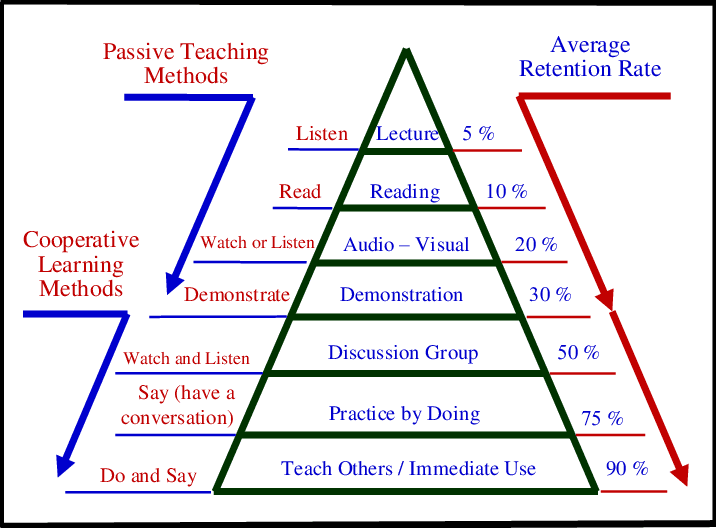
The Feynman technique builds upon the principle of the learning pyramid, which suggests that you only retain 10% of what you see in textbooks, but over 90% of what you teach to others.
The method has been shown to work particularly well for slow learners who want to improve their academic performance and self-confidence.
It applies to any subject and any major, no matter how complex it is.
2. Active recall
Active recall simply means to retrieve information about your course material from memory rather than going back to your textbooks to re-read it.
You essentially activate, or force, your memory to recall whatever you’ve already studied. This retrieval of info can be in the form of:
- Practice questions
- Flashcards
- Teaching the topic out loud to someone else
- Doing a brain dump where you write down everything you remember about the topic you’ve studied, without looking at your notes
- Studying with a partner and taking turns asking each other questions about the material
Whenever you learn something, it gets stored in your brain in the form of neural connections. Actively recalling that material reinforces the connections in your brain.
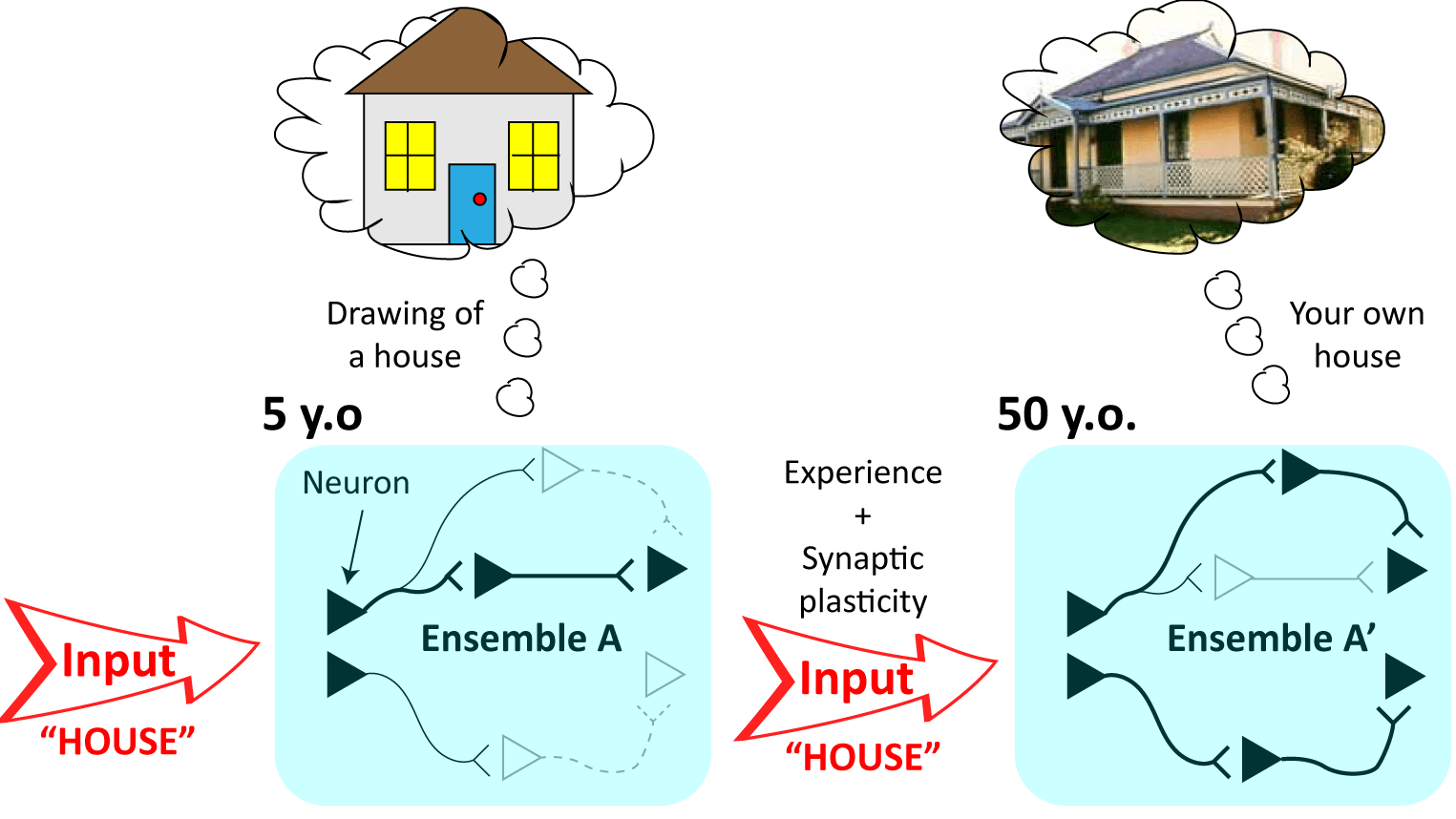
The stronger these connections are, the easier it will be for you to remember the information for longer periods.
3. The SQ3R method
Francis P. Robinson was an educational psychologist who spent his entire life teaching college and university students. He came up with the SQ3R (or SQRRR) study technique, short for Survey, Question, Read, Recite, and Review.
This study method is particularly for textbook material that you have a difficult time understanding. So, you can use it for topics that don't make sense to you the first time you read them from your source material.
Here’s how to use it:
- Survey: Get a quick overview of your textbook chapter. Look at the headings, sections, diagrams, graphs, summaries, etc., quickly.
- Question: Now create yourself questions out of the headings you see during your survey.
- Read: Go through the text with the aim of finding answers to the questions you created. Highlight any important info you find, and make quick notes in the margins.
- Recite: Once you’re done reading, go back to the questions you made and see if you can answer them from memory.
- Review: For the bits you can’t recall, go back to your highlights and margin notes. Ideally, review the same material again within the 24-hour window.
4. Spaced repetition
Spaced repetition is among the most well-researched, scientifically backed study strategies for university students. It is the process of reviewing what you’ve learned at increasingly longer time intervals, for example, 1 day, 3 days, 1 week, 2 weeks, 1 month, and so on.
Our brains have a natural tendency to lose information over time when there is no attempt to retain it. Put simply, if you don’t review what you have studied previously, you’ll forget it.
The brain follows an exponential pattern in forgetting. This is known as the ‘forgetting curve’ (refer to the grey lines in the image below). Research says that you forget 50% of new information within an hour, 70% within 24 hours, and up to 90% within a week.
Reviewing the same info at increasingly longer intervals hacks the brain’s forgetting curve. The curve gets less steep after every review.
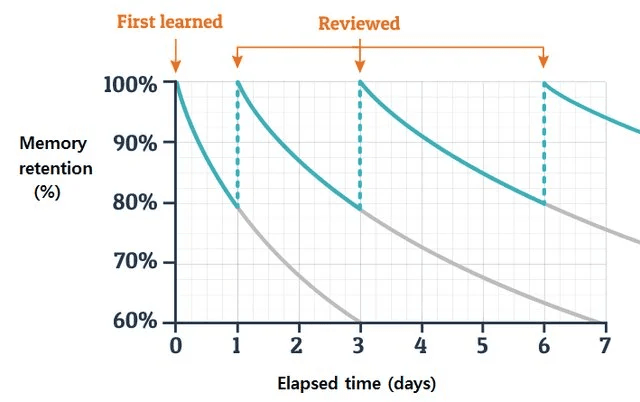
Now, you don’t have to go back to the same material every day. Even if you keep on increasing the time between your reviews, you will be able to retain it for a long time.
Flashcards are a popular way to review course material with spaced repetition, and tools like RemNote have built-in algorithms that automatically schedule your reviews at the right intervals so you don't have to track the timing yourself.
5. The Leitner system
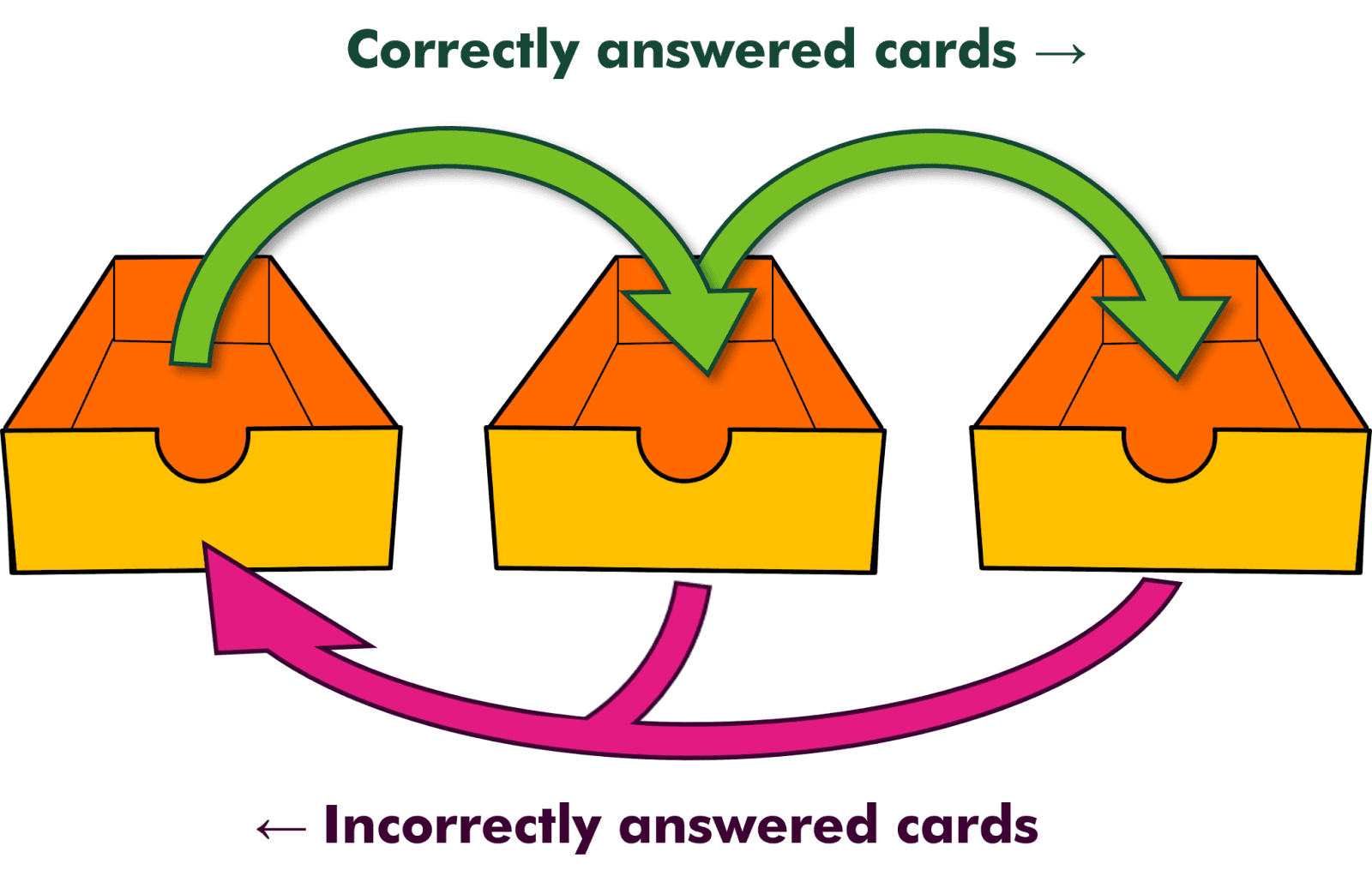
Based on the principle of spaced repetition, the Leitner system uses flashcards that get sorted into different categories based on their level of difficulty.
For instance, you could have 3 categories:
- Difficult to be reviewed every day
- Medium to be reviewed 2x a week
- Easy to be reviewed 1x a week
Initially, all cards start from the same place. But the ones you can recall easily move on to easier levels, so you can increase the duration between their next review, and more difficult ones are reviewed more frequently.
Every correctly answered card will move from difficult to medium, and then to easy intervals. But if you answer it incorrectly, it will stay in the ‘difficult’ category.
This study system works well for challenging topics you can't seem to learn any other way. Study tools or flashcard makers like Anki or RemNote have built-in Leitner system-based flashcard algorithms. All you need to do is create your cards and get your learning started!
6. Concept maps
A concept map, in simplest terms, is a visual representation of your learning material. Statistics say that about 65% of the total population are visual learners, but much of our traditional course material, unfortunately, forces students to read through long texts.
If you can’t sit through reading textbooks, you’re probably better off understanding the material through a visual source, i.e., a video lecture, and then creating yourself a concept map to review it later.
The concept map can be in the form of tables, graphs, flowcharts, timelines, or anything that helps you connect ideas.
You could just put your study topic in a center box and from there, extend as many arrows as you can think of to sort of brain-dump everything you’ve studied. Then, try to form connections between your arrows to link your concepts.
It's simple, low-effort, and doesn't even take too much time.

7. Interleaving
Interleaving means including a mix of many different topics in your study session rather than hyperfixating on one topic for hours.
At first, it sounds counterintuitive. Ideally, you should learn a topic better when you dedicate yourself to focusing just on it rather than studying bits and chunks of many different concepts in one study block.
Research on our brains, however, says otherwise. Interleaved study sessions are known to improve your memory and problem-solving ability because our brain learns best when it is challenged in multiple different ways.
When you switch between topics, the brain will have to work harder to recall all of these different concepts. It feels difficult in the moment, but in the longer run, it creates stronger neural connections that result in long-term retention.
8. Pomodoro
The all-time popular pomodoro technique is more of a time-management system that is known to improve productivity. It consists of focused 25-minute-long study sessions (also known as pomodoros) followed by 5-minute breaks. And after 4 pomodoros, you take a longer break of 15–30 minutes.
You need to set yourself a 25-minute timer during which you try to avoid any distractions and pull a dedicated study session. Then, during your quick break, you can quickly check your phone notifications, get yourself a snack, stretch, or walk a little, etc.
Pomodoro is one of the best study strategies for university students who tend to get distracted too often.
POMODORO TECHNIQUE - My Favorite Tool to Improve Studying and Productivity
9. Helpful study tools
We are fortunate to be living in the age of the internet and AI, where you have a lot of helpful tools to help you study better.
Can’t understand a topic from your source textbook? Go to YouTube, and there will almost always be a pretty comprehensive video that explains exactly what you need.
Need to organize your study material? Use Notion to create study planners, take notes, and keep track of your assignments.
Struggling with reviewing your content? Try using RemNote for flashcards that follow a spaced repetition algorithm.
RemNote is an all-in-one study tool that combines note-taking, flashcards, PDF annotation, and many other helpful AI study tools in one interactive place.
The best thing about RemNote is that it consolidates everything in one place, so you won’t have to switch between Notion, Anki, Quizlet, etc.

You can get started with RemNote for free today.
Top biohacks to score well
Even the best study tips for university students don’t really produce meaningful results if your lifestyle is not optimized for studying well.
Certain biological factors, like your sleep, nutrition, hydration, posture, etc have a direct impact on your academic performance.
Here are some ‘biohacks’ to get your body in a productive zone:
- Get consistent 7–9 hour sleep cycles where you wake up at the same time every day
- Always have a water bottle nearby when you're studying, and keep sipping water frequently
- Move your body before studying, i.e., go for a short walk or do some light stretching to increase the blood flow to your brain
- Study difficult material when your brain is freshest, i.e., during morning hours
- Put your phone in another room during study sessions so you don’t get distracted
- Eat brain-supportive foods consisting of protein, healthy fats, and complex carbs before long study sessions
- Use sunlight as a productivity tool. Getting natural light within an hour of waking up improves your daytime alertness
Study smart. Get higher grades
Learning, in itself, is a skill that once cracked, will make academics manageable for you for years to come. So, it’s great if you’ve decided to take some time out to actually learn how to learn well.
Remember that not all study strategies for university students are meant to work for everyone. But some of them, like spaced repetition or active recall, have been tested time and again and are used by students in demanding fields. They do, however, require consistent effort over time.
Also, effective learning takes structure. Use a study tool like RemNote to organize your notes, create flashcards, and study with intention so that you retain your study material in the long-run.
Sign up for RemNote for free today!