


Structure Your Knowledge, Remember Everything
The Concept/Descriptor Framework helps you break down complex ideas into Concepts (things) and Descriptors (properties). RemNote automatically generates flashcards from your notes: no extra work required.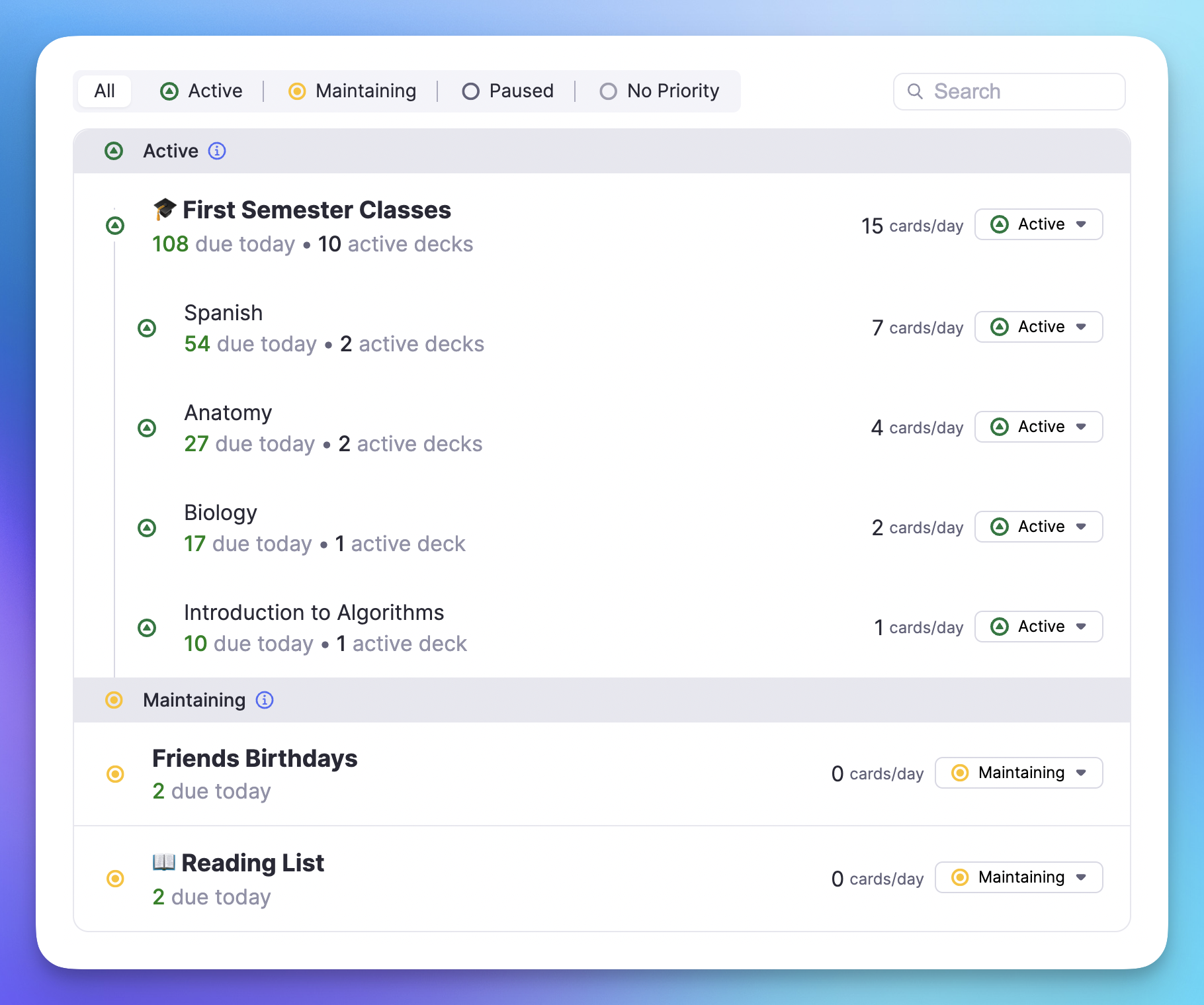
Join 1,000,000+ students getting higher grades!
Think in Concepts, Not Isolated Facts
The world is made up of concepts: things like Cells, Plasma Membranes, and DNA. Each concept has properties: a Cell's components, a Membrane's flexibility. The Concept/Descriptor Framework mirrors how you naturally think, making learning intuitive and retention automatic.
Automatic Flashcards From Your Notes
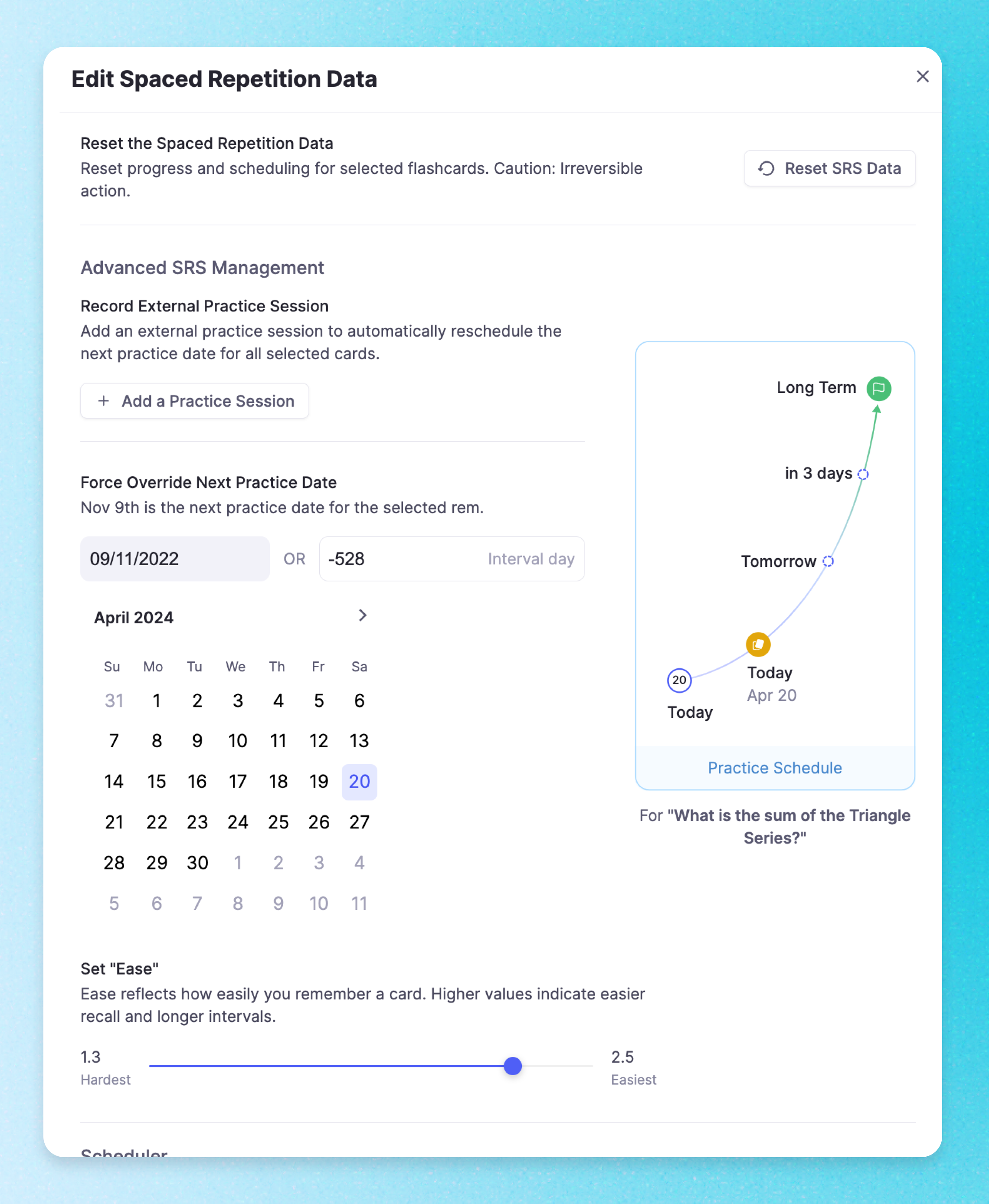
Type :: to create a Concept with a definition, or ;; to add a Descriptor. RemNote instantly generates flashcards in both directions, testing you on the concept name and its properties. No separate flashcard creation step needed.
Build Connected Knowledge
Human memory works through connections: the only way to retrieve information is to think of something related first. With the Concept/Descriptor Framework, your notes form a web of linked ideas. When you review, you see each fact in its full context.
Perfect for Every Subject
From medicine to languages, Concept/Descriptor helps you organize and learn any subject where understanding connections matters.
Medical Students
Organize diseases with symptoms, causes, and treatments. Connect drug mechanisms to pathophysiology.Science Students
Break down cells into organelles, reactions into steps, and theories into principles. See how everything connects.Language Learners
Structure vocabulary with definitions, example sentences, and grammar notes. Build a personal dictionary that teaches itself.Join 1,000,000+ students getting higher grades!
Frequently Asked Questions
What is the Concept/Descriptor Framework?
The Concept/Descriptor Framework is a knowledge-organization method built into RemNote. It lets you structure your notes as Concepts, the core ideas you want to learn, paired with Descriptors, the properties, attributes, and relationships that define each concept. This mirrors the way experts naturally organize information in their minds and makes high-quality flashcard generation automatic.
It is particularly valuable for complex, interconnected subjects where understanding the relationships between ideas matters as much as memorizing individual facts. By capturing knowledge in this structured form from the start, you build a personal knowledge base that grows more useful over time.
How does this help me create better flashcards?
When you organize notes using Concepts and Descriptors, RemNote automatically generates flashcards that test the relationships and properties you have defined. Instead of writing individual cards by hand, every concept-descriptor pair becomes a ready-made question that tests understanding in both directions, from concept to property and from property back to concept.
This approach leads to deeper understanding rather than rote memorization. Because each flashcard is anchored to a structured note, you always review facts in context, reinforcing the connections between ideas and building the kind of layered comprehension that transfers to exams and real-world problem solving.
Can I use this for subjects like medicine or law?
Yes. The Concept/Descriptor Framework is particularly powerful for subjects with dense, hierarchical knowledge. Medical students use it to organize diseases alongside their symptoms, mechanisms, and treatments, while law students structure legal principles with their elements, exceptions, and landmark cases.
The framework handles complexity gracefully because it mirrors how these disciplines are actually organized. You can nest concepts within concepts, attach multiple descriptors to a single idea, and link related topics across your notes, giving you a study system that scales with the depth of your coursework.
Do I have to use the framework, or is it optional?
The Concept/Descriptor Framework is completely optional. You can take notes in RemNote any way you like, using plain text, bullet points, or any combination of formatting. The framework is there for subjects and topics where adding structure helps you learn and retain information more effectively.
Many students use it selectively, applying it to dense factual subjects like biology or pharmacology while keeping other notes more freeform. There is no requirement to commit to one approach. You can mix structured and unstructured notes within the same document and still generate flashcards from whichever sections you choose.
Is my data private and secure?
Yes. RemNote takes data privacy and security seriously. Your notes are encrypted in transit and at rest, and access is restricted to your account. RemNote does not sell user data or share it with third parties for advertising purposes.
The platform is designed with privacy as a foundational principle, so you can organize sensitive study material, personal research, and professional knowledge without concern. You can learn more about specific security practices and data handling on the RemNote privacy policy page.

